Edibles THC Calculator: Determine mg THC per Piece in Seconds
You do not need a spreadsheet and a headache to figure out how much THC is in the bite you are about to take. You need the right numbers, a clean unit conversion, and a quick way to slice a total dose into individual pieces.
Most people run into trouble Additional resources because labels talk in percentages, packages talk in total milligrams, and recipes talk in grams. Meanwhile the thing you actually want is simple: milligrams of THC per piece. That is what a THC edibles dose calculator is built to deliver.
Below, I will show you how to edibles thc calculator calculate it in seconds, with examples that match the real situations people face, like gummies cut from a larger batch, cookies sold by weight, and products labeled by THC percentage instead of total milligrams. I will also cover the edge cases that matter, because guessing is how tolerances get out of hand.
Along the way, I will use the kinds of terms you will see when searching: THC Edibles Calculator, edibles thc calculator, THC calculator edibles, THC in edibles calculator, THC edibles dose calculator, and even Ounce of Hope as a placeholder for “the method someone is using” when they want fast, consistent numbers.
The core idea: everything comes down to one ratio
Most edible math boils down to this:
mg THC per piece = (total THC mg in the product) ÷ (number of pieces)
The only question is where the “total THC mg in the product” comes from. Sometimes the package lists total THC in milligrams directly. Other times it lists THC as a percentage, like 10% or 25%. If it’s percentage, you convert it to milligrams based on the total weight.
A THC calculator edibles workflow usually looks like two steps:
- Find total THC in the whole item or package.
- Divide by how many pieces you plan to eat.
If you can do those two steps reliably, your dose gets predictable, and you can adjust calmly instead of emotionally.
What you need before you calculate (no guessing)
Here is the minimum set of inputs that makes a THC in edibles calculator actually work.
- the product’s THC info (either total THC mg, or THC percentage plus total weight)
- the total edible weight (or the net weight for the whole package)
- how you are defining a piece (for example, one gummy, one square of chocolate, one cookie half, one “bite” you cut)
- the count of pieces (or the size rule you used to cut them)
- any label details about whether THC is listed as mg per serving versus total mg
If you are missing any one of those, you can still estimate, but you should treat it as an approximation.
When the label gives total THC in milligrams
This is the fastest scenario, and it is the one most “in seconds” calculators are really optimizing for.
If the label says something like:
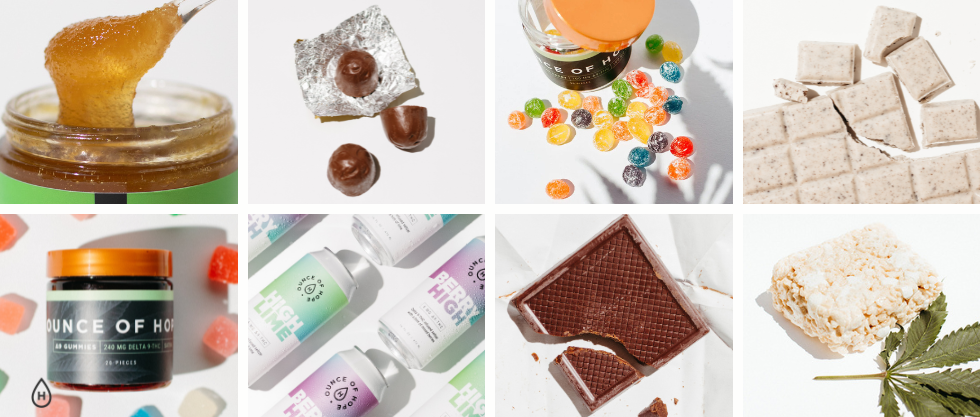
- “Each package contains 100 mg THC,” and
- “There are 10 gummies,”
Then your math is immediate:
- 100 mg ÷ 10 pieces = 10 mg THC per gummy
If the label instead gives “10 mg per serving” and the serving size is one gummy, then it is already done for you. The main work is matching “serving” to “piece.” People often eat two servings while only counting one.
That mismatch is where overdoing it happens.
When the label gives THC percentage (the conversion people mess up)
Many products list THC like “THC: 20%” but do not tell you the total milligrams outright.
A percentage is not a milligram amount. It is a fraction of the mass.
To convert, use this relationship:
- THC mass (mg) = total product mass (g) × THC percentage × 1000
Because:
- grams to milligrams is multiplying by 1000
- percentage to fraction is multiplying by the decimal (for example, 20% becomes 0.20)
Then once you have total THC mg for the entire product, you divide by the number of pieces.
The practical formula
If:
- total weight = W grams
- THC percentage = p percent
- number of pieces = N
Then:
mg THC per piece = (W × (p/100) × 1000) ÷ N
If you want it compact: mg THC per piece = (W × p × 10) ÷ N
That “× 10” comes from 1000/100 = 10.
Worked example 1: gummies labeled by THC percentage
Imagine a gummy package says:
- net weight: 10 grams
- THC: 10%
- number of gummies: 20
First find total THC mg:
- total THC = 10 g × 10% × 1000 mg/g
- total THC = 10 × 0.10 × 1000 = 1000 mg THC? Not yet, slow down.
Here is the catch: 10 g × 0.10 = 1 gram of THC. Then 1 gram is 1000 mg.
So yes, that math says total THC is 1000 mg.
Now divide into pieces:
- mg per gummy = 1000 mg ÷ 20 = 50 mg per gummy
That is a huge dose for a gummy. Many gummies on the market do not actually reach those numbers, but this example shows why reading percent labels carefully matters. A label with THC percent can look “smaller” than it really is until you convert it.
If the numbers feel unrealistic compared to what you have tried, double-check:
- whether the label is THC “per serving” instead of the whole package
- whether the percentage applies to a smaller fraction of the batch
- whether the “THC” field includes decarbed THC or raw THCA equivalents (some labels handle this differently)
A cautious approach beats a careless one.
Worked example 2: chocolate squares with total THC mg listed
Now a more typical scenario.
A chocolate bar label says:
- total THC: 120 mg
- there are 12 squares
Then:
- 120 mg ÷ 12 = 10 mg per square
If you eat 3 squares, you are at:
- 3 × 10 mg = 30 mg
This is where an edibles thc calculator earns its keep. You can plan your dose, not just react to the effects later.
Worked example 3: homemade batch, dose by weight and yield
If you make edibles at home, you might not have “pieces” labeled on a package. You need two things:
- How much total THC you infused
- How many pieces you portioned
Let’s do a clean, realistic approach without pretending we know your extraction efficiency.
Say you started with an oil and you know (from your preparation calculations) that your finished oil is effectively “X mg THC per tablespoon.” You then bake using a known number of tablespoons across the entire batch, and you portion the final product into slices.
A THC edibles dose calculator can still help, even if the THC is calculated from your starting material. The main risk is treating infusion as 100% efficient. In practice, infusion losses are real, but you can still stay consistent batch to batch by using your best estimate and not changing your portion sizes until you gather feedback.
The math structure stays the same:
- total THC in batch ÷ number of portions
Consistency is what lets you improve the estimate over time.
The “seconds” method: mental math shortcut you can trust
You can calculate quickly without losing accuracy when you set up the structure first.
When total THC mg is listed
- Divide by pieces.
- If you eat multiple pieces, multiply.
Example: 200 mg per pack, 25 pieces.
- 200 ÷ 25 is 8
- each piece is 8 mg
- 2 pieces is 16 mg
When THC percent is listed
Use the compact conversion:
mg THC = grams × percent × 10
Then divide by pieces.
Example: 6 grams, 15%, 24 pieces.
- total THC mg = 6 × 15 × 10 = 900 mg
- mg per piece = 900 ÷ 24 = 37.5 mg
Yes, you may end with decimals. That is okay. Real dosing is not always whole numbers, especially with smaller pieces.
If the decimal makes you uncomfortable, do not round randomly. Instead, carry the fraction through your “how many pieces” calculation, then round at the end in a consistent direction. For example, if you are trying to be conservative, round down.
Matching “piece” to reality, not to the label
This is the part that trips people up most: how you define a piece.
Some packages have a clear count, like 10 gummies. Others are ambiguous, like a “bar” that can be snapped into different sizes. If the bar is divisible but not uniform, you do not truly have “mg per piece” unless you standardize your portioning.
I recommend treating your pieces as measured units:
- for gummies, count them
- for cookies or brownies, slice and weigh or count equal-size squares
- for drinks, define the dose by volume, not by “a sip”
A THC calculator edibles tool can give you numbers, but your portioning determines whether those numbers match what you actually ate.
Edge cases that matter (the stuff that changes the outcome)
1) “Per serving” versus “per package”
If a label says “10 mg THC per serving” and then lists “servings per package: 10,” total THC could be 100 mg. If you assume “per package,” you will be off by a factor of 10.
A good THC in edibles calculator always starts by confirming whether the mg number is total or per serving.
2) Mixtures, layered products, and variable weights
Some edibles are not uniform. Layered chocolates, swirled drinks, or multi-flavor gummy packs can have uneven distribution.
A THC Edibles Calculator gives a dose estimate based on uniform distribution. That is usually a reasonable assumption, but not perfect.
If your first edible experience was noticeably stronger or weaker than expected, distribution variance could be part of it.
3) Home made ingredients and yield
When you cook, the final weight can change. Water loss, caramelization, and evaporation shift grams even if THC content does not evaporate the same way.
So if you calculate using the final product grams but the infusion happened earlier, you need to be sure the THC is still proportional to that final mass. Otherwise your dose per piece can drift.
4) Cannabinoid conversions and labeling conventions
Labels may reference THC in different ways depending on jurisdiction and testing approach. Some products are reported as THC already, others may require conversion between THCA and THC equivalents.
I am not going to invent a universal conversion rule here because it varies by testing and labeling. The safest move is to use exactly what the label provides. If it says THC in mg, use mg. If it says THC percent, use that percent. If it gives both or mentions equivalents, follow the label’s stated field for THC.
Two quick checklists that prevent dosing mistakes
Here are two short sanity checks that work well with any THC edibles calculator.
Before you calculate
Make sure the THC number and the weight you use refer to the same “universe”:
- if you use total package grams, use total package THC
- if you use “per serving,” divide by pieces per serving, not pieces per whole pack
After you calculate
Do a reality check:
- if a single gummy comes out to something like 2 to 5 mg, that seems plausible in many markets
- if it comes out to 50 mg, double-check the THC percentage math and whether the percent is for the whole pack
You do not have to panic when numbers seem high or low. You do need to verify the inputs.
Common unit conversions (so you can move fast)
- 1 gram = 1000 milligrams
- 10% THC = 0.10 fraction
- mg per piece = total mg ÷ number of pieces
- mg total from percent = grams × percent × 10
- percent to decimal = percent ÷ 100
This is the backbone of any THC in edibles calculator, whether you are using an app, a calculator website, or paper math.
How to use the calculator with the least risk
People think the hardest part is math. Most of the time the hardest part is decision-making: how much to take, when, and how to adjust.
A good THC edibles dose calculator supports that decision by giving you clarity up front.
My practical advice is to treat the first dose as a plan, not a dare:
- start at the lower end of your expected range if you are unsure about potency
- give enough time for onset, especially with edibles
- take notes on dose per piece and the number of pieces, so your next calculation is faster
If you have a “THC edibles dose calculator” that tells you 12.5 mg per piece and you decide to start with 1 piece, write it down. If you later decide to try 2 pieces, you can directly compare apples to apples.
Consistency beats guesswork, and it also reduces the chance of turning a normal day into a rough one.
A “piece-by-piece” approach for mixed packs
Mixed packs are common, especially for products sold as multiple flavors or sizes. If each piece is the same weight but not the same flavor, mg per piece might still be identical, or it might vary.
If the label gives separate THC numbers per flavor, use the specific ones. If it gives one number for the whole pack, use total and divide by the total number of pieces across all flavors, assuming uniform distribution.
If you want to be careful, you can use a conservative assumption: estimate based on the highest THC piece you might eat, then scale down if you confirm uniformity by weight.
That strategy is not about fear. It is about control when information is imperfect.
Where “Ounce of Hope” fits in (the practical mindset)
The phrase “Ounce of Hope” comes up for some people when they want a simple way to dose without spiraling through math. The real takeaway is the mindset: you are aiming for repeatable, calm dosing.
An edibles thc calculator can support that by turning vague labels into a clear dose per piece. You can then focus on what matters:
- your tolerance on that day
- your schedule and comfort
- how you respond over time
If you consistently calculate mg per piece, you stop relying on “that feels about right” and start using something measurable.
Putting it all together: a quick reference example
Let’s say a product says:
- net weight: 8 grams
- THC: 12%
- pieces: 16
Total THC mg:
- 8 × 12 × 10 = 960 mg total THC
Dose per piece:
- 960 ÷ 16 = 60 mg THC per piece
If you eat half a piece, that is 30 mg. If you eat 2 pieces, that is 120 mg.
Whether you are using a THC Edibles Calculator, the numbers come from the same structure: convert to total THC mg, then divide by pieces.
Final thoughts on accuracy (and why “close enough” is not always close)
“Close enough” can be fine for casual planning. It is not fine when you are new to edibles or when your first dose might be your most powerful one due to tolerance gaps.
If you want reliable results from any THC calculator edibles method:
- use the label’s exact THC field
- keep your units consistent
- standardize your definition of a piece
Do that, and the calculation becomes boring, which is exactly what you want. Boring math leads to better decisions, and better decisions lead to experiences that are more predictable and less chaotic.
If you want, tell me what you have (the THC percent or total THC mg, the net weight, and how many pieces), and I can calculate the mg THC per piece using the same THC in edibles calculator logic.